
The difference between framed and frameless kitchen cabinets is at the front of the cabinet box. Framed cabinets have a face frame around the opening. Frameless cabinets leave that frame out, with doors mounted to the cabinet sides. This changes access, hardware choices and installation details, but it does not tell you everything about quality or style.
If you are comparing kitchen cabinets for a Plano or Dallas–Fort Worth home, open the sample doors before judging the finished look. Two kitchens can look similar with the doors closed and work differently once you begin loading drawers and shelves.
The short version
- Framed and frameless describe the cabinet box; Shaker and slab describe door styles.
- Compare the actual opening and usable drawer interior in the same cabinet width.
- Check materials, hardware specifications and installation scope separately from construction type.
- Review complete, itemized layouts rather than assuming one construction type is always cheaper.
1. Start with the box, then look at the door
A face frame is an assembly of vertical and horizontal pieces attached to the front of a cabinet. Depending on the design, doors may cover part of that frame, cover most of it, or sit inside its openings. A full-overlay framed cabinet can therefore have a clean, closely spaced appearance.
A frameless cabinet has no separate face frame around the opening. You may hear it called European-style or full-access cabinetry. The absence of a face frame makes access different; it does not mean the cabinet is unfinished or has no doors.
Keep construction and door profile on separate lines in your notes. A Shaker door is identified by its recessed center panel and surrounding rails and stiles. That door profile alone does not establish whether the cabinet behind it is framed or frameless. Check the specific cabinet line rather than inferring construction from a photograph.
2. Compare usable storage with something you actually own
Start with two cabinets of the same outside width. Measure the clear opening, usable shelf area and drawer interior. A face frame can narrow the opening; hinges, drawer slides and the rest of the box construction also affect what fits. Avoid applying a single storage-gain percentage to every frameless kitchen.
Choose one awkward item, such as a stockpot, serving platter or countertop appliance, and record its dimensions. Check whether it passes through the opening, fits with the door closed and can be removed without taking other items out. For drawers, compare interior width, depth and height rather than the width of the drawer front.
Then repeat the check for the actual organizer you want. A waste pullout, tray divider or corner fitting needs the correct opening, hardware and clearance. Full access is useful only when the planned storage fits your routine.
3. Evaluate quality separately from the frame
Neither construction label is a complete quality rating. Ask for the cabinet line’s box materials, joinery, back and mounting details, finish-care instructions, hinge specification, drawer-slide rating and written warranty. Inspect how the sample drawer feels when loaded, not just how quietly it closes empty.
Soft-close hardware is a feature, not proof of the whole cabinet’s durability. Likewise, a plywood box description does not explain the door material, finish system or installation method. Compare the complete specification.
If certification matters to you, verify the exact manufacturer and cabinet line. KCMA states that both framed and frameless cabinets can qualify for its quality certification. Do not assume that every collection from a manufacturer shares the same certification or warranty.
4. Ask how the cabinet meets your walls and appliances
The installation drawing should account for corners, wall irregularities, fillers, finished ends and appliance clearances in either construction type. Check doors and drawers at inside corners, beside walls and next to projecting appliance handles. Open them in the proposed layout before approving the order.
Closely spaced fronts make consistent alignment easy to notice. Ask how the installer will level, secure and adjust the selected system, following that manufacturer’s requirements. An older home’s uneven wall is a measurement and installation issue to resolve, rather than a reason to select a cabinet from its label alone.
Confirm the finished refrigerator opening, dishwasher relationship and range or cooktop requirements using the actual appliance specifications. A showroom sample cannot answer how every moving part will interact in your kitchen.
5. Compare complete quotes on the same layout
There is no dependable universal rule that framed or frameless cabinetry will cost less. The selected line, finish, door, accessories and modifications all affect the quote. Changing the layout at the same time can make the comparison misleading.
Ask for two versions of the same cabinet plan with matching storage needs. Review the number and size of cabinets, drawers, finished panels, fillers, trim, hardware and interior accessories. Confirm which measurement, delivery and installation work is included and which work is quoted separately.
If one option is outside your budget, ask which specific selection changes the total. A simpler finish or fewer specialty fittings may be a more useful adjustment than abandoning a construction type you prefer.
6. Bring this checklist to a cabinet consultation in Plano
Bring room photos, a short list of storage problems, appliance model numbers if selected, and dimensions for your hardest-to-store items. Rough room measurements help the conversation; final cabinet ordering still requires a verified plan.
At Decohub, the first steps include a free consultation, free in-home measurement and free 3D planning. We help connect the cabinet layout, door style and finish with your home. Cabinet supply and any installation agreed for your project are coordinated through the project scope; supply-only options are also available.
Visit 860 F Avenue, Suite 100, Plano, TX 75074, or use our cabinetry inquiry to start the conversation. If you want to examine a particular cabinet system or finish, contact the team before visiting to check sample availability.
- Is this exact cabinet line framed or frameless, and which overlay is shown?
- What are the clear opening and usable drawer dimensions?
- Will my cookware and selected organizers fit?
- What materials, hardware and warranty apply to this configuration?
- Which fillers, end panels and installation services are in the quote?
Photo and further reading
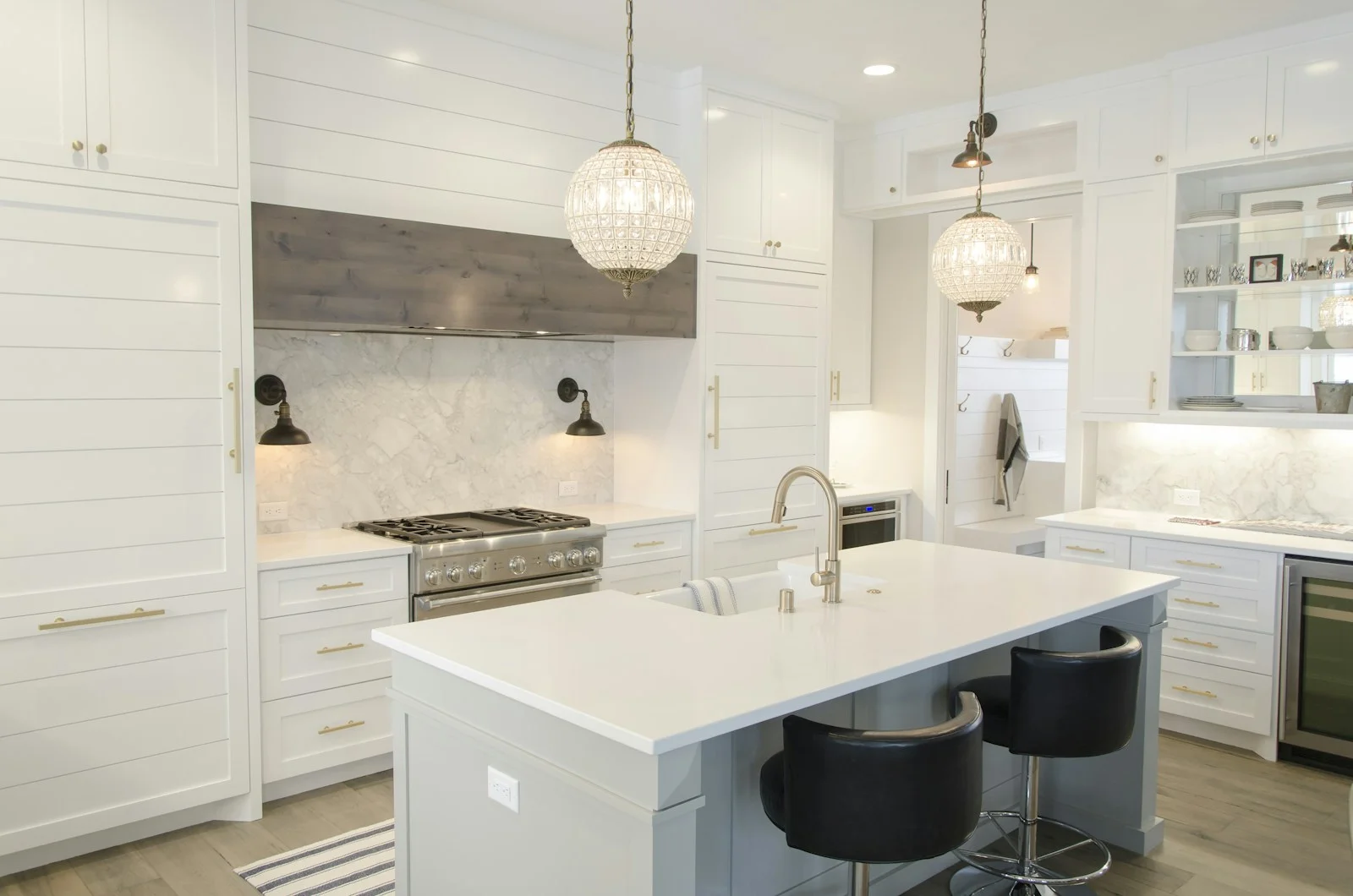
Kitchen inspiration photograph by Aaron Huber on Unsplash. This stock image illustrates a kitchen setting; it is not a Decohub project or a specification of the cabinet construction shown.
For cabinet terminology, see the Kitchen Cabinet Manufacturers Association’s Glossary of Cabinet Terms (kcma.org/resources/glossary-cabinet-terms). For construction and material definitions, see MasterBrand’s Cabinet Construction guide (masterbrandcabinets.com/get-started/design-your-room/cabinet-construction). Certification information: kcma.org/resources/Quality-Cabinet-Certification-FAQs. Reviewed November 2, 2026.
